
Mbappé: The French Love to Criticize Each Other and Belittle Their Own Players
autty 2026-05-12 23:24:40 评论
Mbappé graced the cover of the latest edition of "Vanity Fair." The French striker for Real Madrid gave an exclusive interview during the recent international break, opening up about his views on football, his social role, how he handles fame, and the upcoming World Cup, among other topics. Due to the length of the interview, it will be published in three parts; this is the second installment.
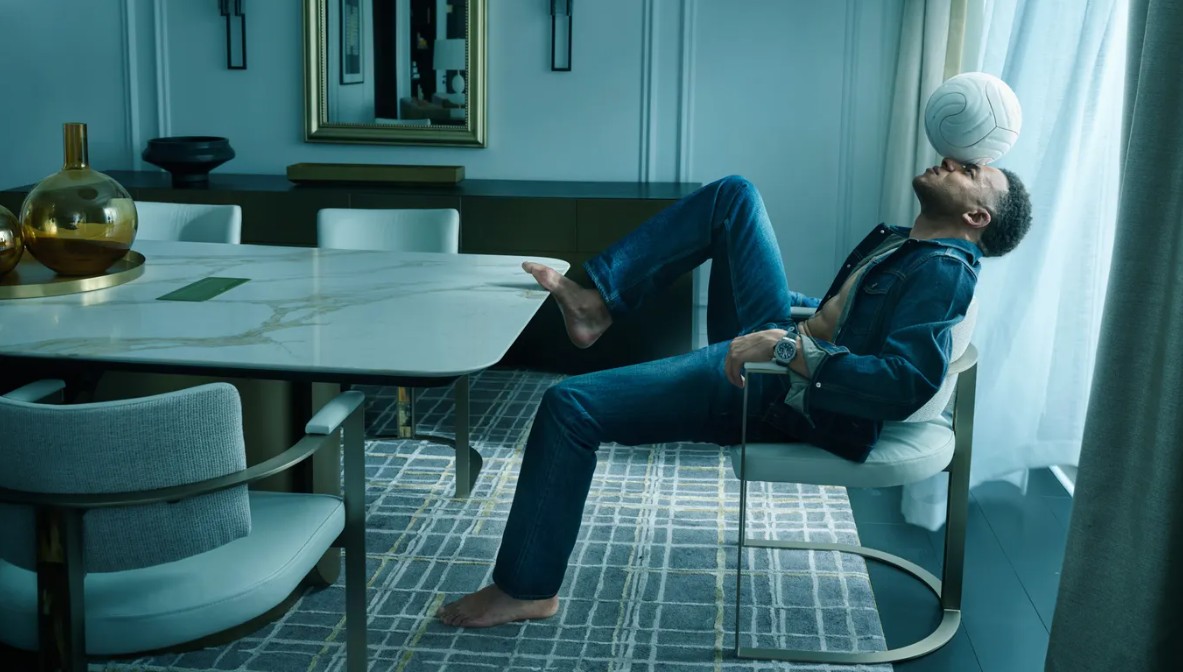
Interview Highlights
Mbappé, with his innovative talent and brilliant achievements, became famous at a young age, yet has always maintained an approachable charm and mature mindset. However, criticism has never ceased. Some accuse him of being too selfish on the pitch and complaining whenever things don't go his way. This controversy has followed him throughout his career. Even during his time at Monaco's youth academy, he was criticized for his reluctance to actively track back defensively.
Now playing for La Liga giants Real Madrid, Mbappé has become a polarizing figure in the eyes of some fans and the rigorous local tabloids. On the international stage, his every move is scrutinized under a microscope. In a recent friendly, a video of him taking the captain's armband from beloved French midfielder Kanté quickly went viral. Such incidents spawned the internet meme "Dictator Mbappé," portraying the French national team's on-field leader as an autocratic, exclusionary, iron-fisted figure controlling the team.
"Some people think he's occasionally a bit arrogant," Laurent admitted, "but in my opinion, he's simply a born winner with absolute confidence in his own abilities." Drury agreed: "He has an innate composure and certainty, as if he were born to be at the top."
Driving from Charles de Gaulle Airport into Paris, a magnificent mural of Mbappé stands beside the road. This is Bondy, a suburb in Seine-Saint-Denis, where he grew up. Many famous French footballers hail from here, and this area is among the poorest in France.
Thanks to his family's care and support, Mbappé had a stable childhood, immersed in sports from an early age. His mother, Fayza, came from a family of Algerian immigrants, grew up in Bondy, and was a professional handball player; his father, Wilfrid, is a Cameroonian immigrant and coaches at the local Bondy football club. The family lived in a modest apartment overlooking the stadium. As a baby, Mbappé would follow his father around, kicking a football.
His childhood had one goal from start to finish: to reach the professional football stage. "Wherever he was, he only wanted to play football," Laurent admitted. "This love is almost instinctive—not just an obsession, but an inner drive." From childhood, he idolized Zidane. The legendary French superstar led the team to World Cup victory in 1998, the year Mbappé was born.
There's an anecdote from his childhood: young Mbappé insisted his barber give him the same hairstyle as Zidane—short on top and shaved on the sides. At the time, he was too young to realize that Zidane's hairstyle wasn't a deliberate style choice, but due to hair loss. Speaking about this, Mbappé smiled and defended himself: "I was very young back then! But you can also see the innocence of children, unable to understand that even such a famous and powerful star would experience hair loss."
Mbappé joined a local Bondy team at age six. By twelve, this football prodigy from Paris's suburbs was well-known to scouts across Europe. Soon, many top clubs offered him trials, including Chelsea and Paris Saint-Germain. At that time, Zidane, who was coaching Real Madrid, personally invited his family to Madrid, hoping to bring him under his command. His parents carefully planned his budding career, declining invitations from top clubs and choosing to let him develop steadily near his hometown.
"My childhood was quite ordinary," Mbappé described, noting that his parents were kind, attentive, and cared for him well. He left his hometown to join Monaco at age fourteen. "From childhood to adulthood, I actually spent very little time with my parents," he said. "Though there are regrets, this was my own choice."
Mbappé never had the slightest doubt about his future. At age six, he declared to everyone around him that he would play for Paris Saint-Germain and Real Madrid, win the Ballon d'Or, and lead the French national team to World Cup victory. By nineteen, he had already achieved two of these dreams.
After helping Monaco reclaim the Ligue 1 title, Mbappé was transferred to Paris Saint-Germain for 180 million euros, becoming the most expensive young player in history. During his time in Paris, he was favored by French President Macron and deeply loved by local fans.
As a local superstar, he brought league titles to Paris and continued the team's glory. But after five years, he decided to begin a new chapter. Paris Saint-Germain fought to keep him, and the matter escalated to the national level. Macron and former President Nicolas Sarkozy personally came to persuade him, and Mbappé ultimately stayed for two more years.
In 2024, Mbappé's relationship with Paris Saint-Germain completely broke down, and he was transferred to Real Madrid. He also sued the club, demanding unpaid wages, and the court ruled that Paris Saint-Germain owed him 60 million euros.
After arriving in La Liga, he won the league's top scorer award for two consecutive seasons, but the team has yet to win a major championship trophy, and the media has also criticized his playing style as overly individualistic. In his first season with Real Madrid, he missed two consecutive penalties and openly stated that his career had hit rock bottom. Though he maintains a terrifying scoring efficiency, the Champions League title and Ballon d'Or he dreamed of as a child remain out of reach. Critics have even pointed out that in the season after Mbappé's departure, Paris Saint-Germain successfully won the Champions League title, and now the team is expected to win consecutive Champions League titles with a galaxy of new stars—a situation that inevitably makes Mbappé feel turbulent.
Now no one doubts Mbappé's scoring ability. Preparing for his third World Cup, he's even expected to break the all-time World Cup scoring record. But the outside world continues to debate: whether his extraordinary personal talent has disrupted the tactical balance and team environment at Real Madrid. The biggest question now is whether he can lead the French national team to World Cup glory as the number one striker and young captain.
At Euro 2020, Mbappé missed a penalty in the crucial shootout, directly leading to France's elimination. After the match, he faced overwhelming racist abuse and once considered leaving the national team. This is also a common dilemma faced by French players of diverse backgrounds: when the team wins, they are national heroes and symbols of French glory; once they lose, they are maliciously labeled as foreigners and accused of being unworthy to represent France.
This contradiction was already evident when France won the championship in 1998. Far-right French leader Le Pen openly complained at the time that there were too many players of African descent in the national squad. Zidane grew up in a working-class community in Marseille, and his parents were Algerian immigrants. Even after leading the French national team to glory, he frequently faced such prejudiced remarks. French football has never lacked stars from immigrant families of former colonies. At least twelve players on the French national team competing in the Canada-Mexico-USA World Cup are second-generation French immigrants.
As France's spokesperson, Mbappé never shies away from political questions in football and society. When asked about players being criticized by their own people because of their ancestry, his response was thoughtful and candid: "Setting aside these controversies, this is essentially an inherent French characteristic," he said. "We are French first and foremost. The French are born to complain and are always hard to satisfy. This is a French trait—the French always love to criticize and judge one another. I'm also French and share this characteristic!"
"But the younger generation is working hard to change this inherent mindset, and social concepts are gradually shifting," he continued. "As public figures and representatives of France facing the world, we have a responsibility to show the best side of our country to the outside world. It's true that there are negative voices within the country, but France itself is a very charming nation with a deep cultural heritage and far-reaching values. It's undeniable that the French always love to belittle their own players!"
Traduzido por IA.
- 消息参考来源: DongQiuDi
- 严禁商业机构或公司转载,违者必究;球迷转载请注明来源“懂球帝”
- 懂球帝社区规范:抵制辱骂

